
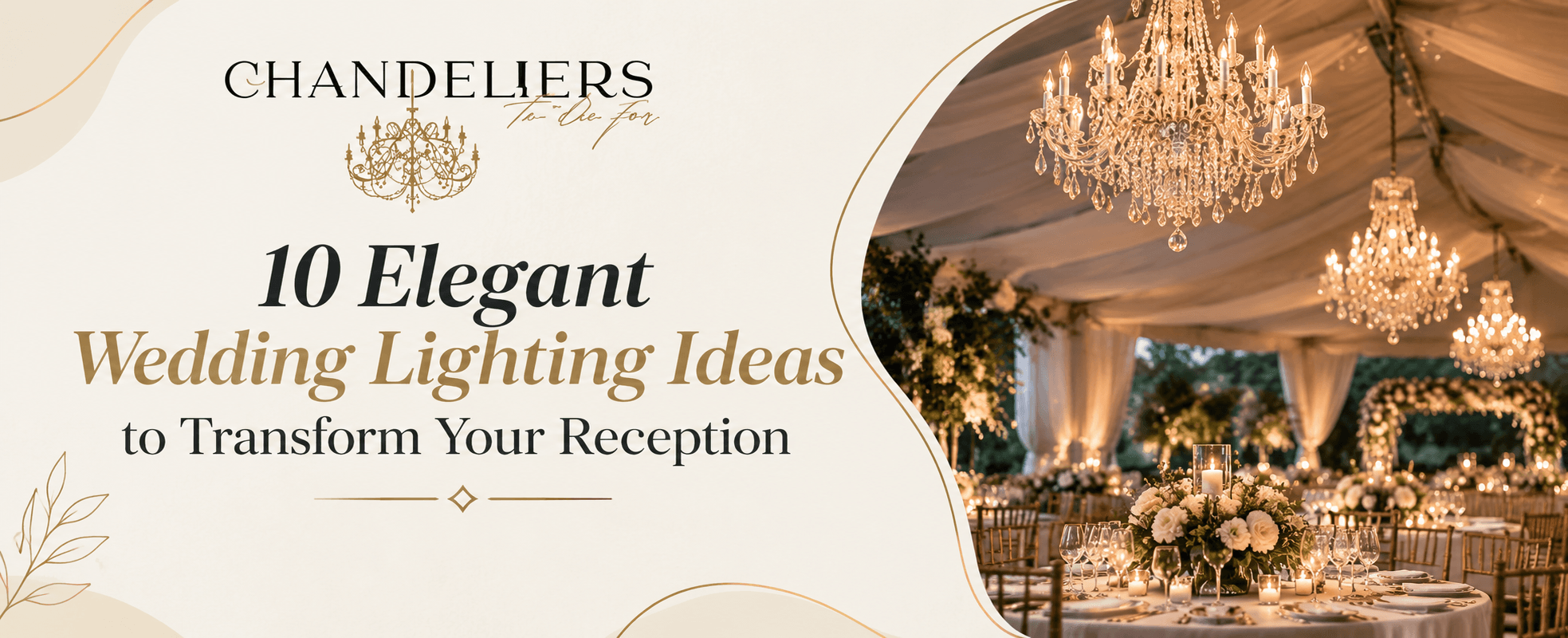
10 Elegant Wedding Lighting Ideas to Transform Your Reception
Lighting changes how a reception looks and feels. It marks out the dining area, draws the eye to the parts of the venue worth noticing, and helps separate spaces while keeping the whole event connected. From the ceremony space and wedding aisle decor to the reception tables, the right lighting can help create a consistent look. The best wedding reception lighting ideas are the ones that suit your venue, your décor, and your style, so treat this list as a menu rather than a checklist. Most receptions need a few, not all ten.
Quick answer: Elegant wedding lighting usually means one main feature overhead, softer light at the tables, and small touches around the room. Check your ceiling height and venue style before you choose anything.
1. Crystal chandeliers
A crystal chandelier makes the ceiling part of the design. It pulls the eye upward and can define a dining or reception area, so the decoration doesn't all have to sit at table level. The limit is height. You need enough room above guests to carry a substantial hanging piece, which is why chandeliers work well in ballrooms, marquees and heritage venues.
2. Suspended floral chandeliers
These put flowers and light in the same overhead feature. They suit a garden-style wedding, where soft ambient lighting and hanging florals can read as one setting. What matters is that the lighting looks like it belongs to the wedding. If it feels like a separate item added afterwards, the effect is lost.
3. Hanging ceiling installations
The space above your guests is easy to forget about. A ceiling installation uses it, adding another visual layer and helping define different areas of a venue. Like chandeliers, these depend on enough ceiling height, so confirm that first.
4. Pendant lighting
Pendants suit a modern reception, particularly when paired with clean ceiling installations. Their strength is consistency. One coordinated ceiling treatment gives the room a clearer direction than several unrelated decorative pieces scattered around it.
5. Candelabras at the tables
Not all the light has to come from above. Candelabras bring it down to the tables. Some are designed as centrepieces, and larger floor-standing designs also exist. They add height and detail to the dining setup, and the lighting becomes part of the table design rather than something hanging over it.
6. Candles
Candles are a quieter layer. Set along the dining tables, they don't need to be the main event. Use them for the small details and let a larger chandelier or ceiling installation carry the room.
7. Decorative lanterns
Lanterns belong near entrances and other transition points in the venue. They carry the lighting beyond the dining area, so the different parts of the celebration feel connected instead of abruptly separate.
8. Lighting for the cake table
The cake table benefits from softer, focused light that makes it visible in the wider room. You don't need another major installation for this. A subtle feature is enough to give an important moment its own presence.
9. Lighting the architecture
If the venue already has distinctive architectural features, light them. It tends to look more cohesive than adding decorative elements just to fill empty areas.
10. Layering
You don't have to rely on a single feature. A chandelier or ceiling installation can define the main dining space, while candles, lanterns and softer lighting support the other areas. Layering also helps the atmosphere hold up as the day moves from the reception into the evening.
How to choose wedding reception lighting
Begin with the venue, not the fixture. Look at the ceiling height, the room layout and what each area is used for before deciding where anything goes.
Style comes next. Match the lighting to the wedding you're actually planning:
Wedding style
Lighting that suits it
Needs ceiling height?
Classic
Crystal chandeliers, candelabras
Chandeliers do
Garden
Suspended chandeliers, soft ambient lighting
Suspended pieces do
Modern
Pendant lighting, clean ceiling installations
Ceiling pieces do
Then hold back. Too many statement pieces in one room compete with each other. Pick a main feature and let the smaller elements support it.
Mistakes worth avoiding
- Leaving lighting until the last minute. It then has to fit around venue and décor decisions already made.
- Choosing fixtures that don't suit the venue's scale. A piece that's too small or too large looks out of place.
- Overlooking ceiling height. It decides whether hanging pieces are possible at all.
- Lighting every area the same way. The room loses variety.
Plan the lighting with the rest of the day
Decide on lighting alongside the venue, tables, and décor, rather than after them. If chandeliers, candelabras, or ceiling installations are on your list, Chandeliers to Die For offers them as part of our event collection. Get in touch with us to discuss your lighting needs and find options that suit your celebration.
Questions About Wedding Lighting Ideas Couples Often Ask
1. What's the best lighting for a wedding reception?
Honestly, there's no single best choice. A ballroom and a small hall need very different things. Think about the room first: how high the ceiling is, how the space is laid out, and what style and feel you want. The lighting choice usually follows from that.
2. Can I use a chandelier and candelabras together?
You can, and lots of receptions do. The chandelier handles the light above; the candelabras handle the tables. What matters is that they look like they came from the same plan. If the styles clash, the room feels messy.
3. How do I choose lighting for my wedding style?
Look at the venue and the overall look you're going for. Crystal chandeliers and candelabras are usually linked with classic weddings. For a garden-style day, suspended chandeliers and soft ambient lighting fit well. Pendant lighting is the one people tend to pair with modern weddings.
4. When should I start planning the lighting?
As early as you can, ideally when you pick the location and the décor. Leave it to the end, and you're trying to squeeze it around decisions that are already made.
5. What do I need to check before choosing hanging lighting?
Ceiling height comes first, because a hanging piece needs room. Then check that the venue suits the kind of installation you want and how the room is laid out so the lighting doesn't get in the way of anything else.